-
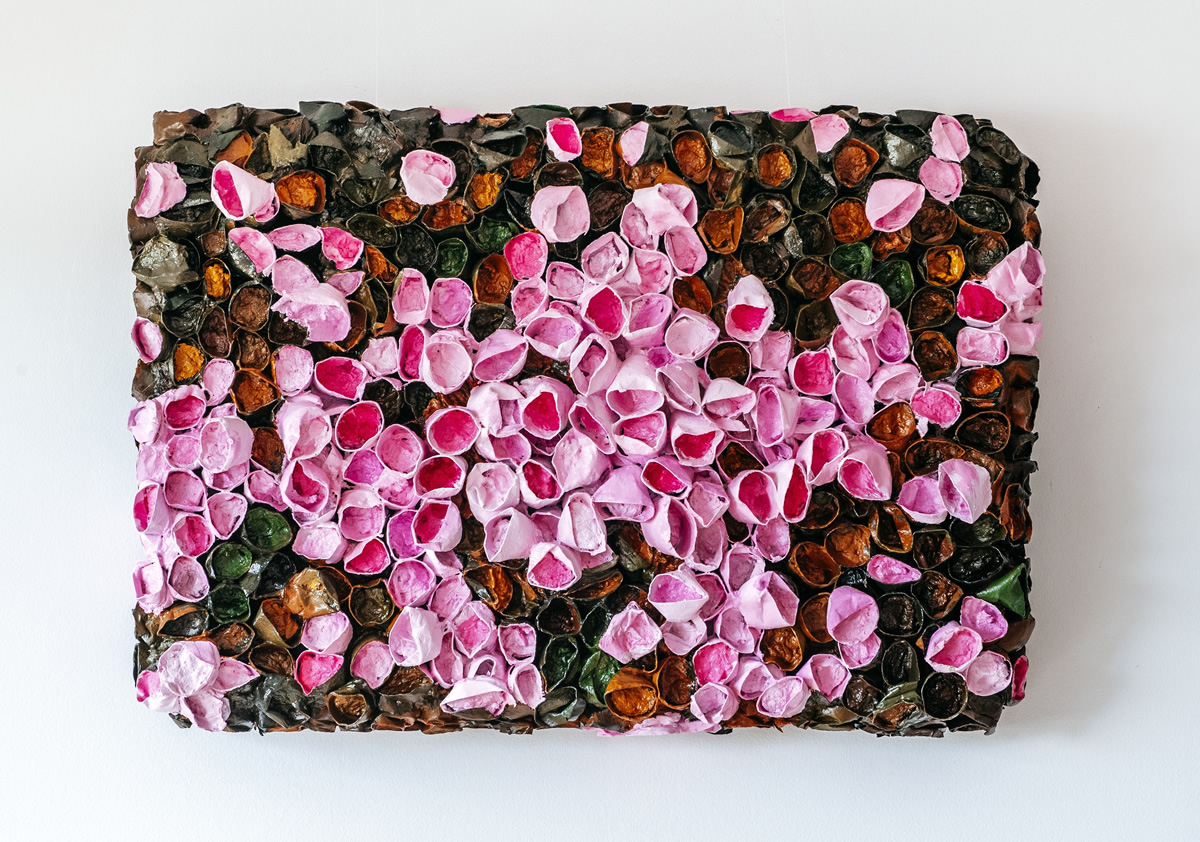
- Almond blossom, 95x65x13cm, recycled paper and acrylic on wood panel
-
- Bougainvillea, 95x65x13cm, recycled paper and acrylic on wood panel

-
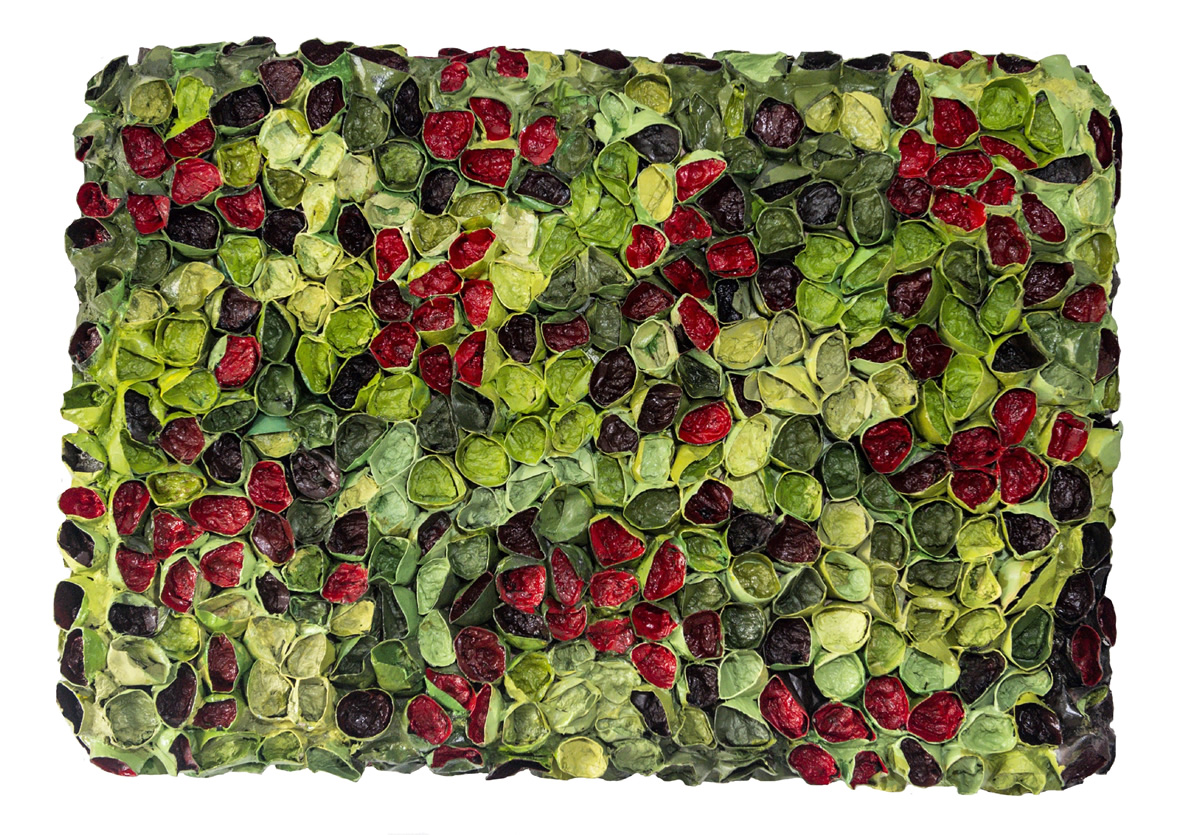
- Hibiscus blossom, 95x65x13cm, recycled paper and acrylic on wood panel
-
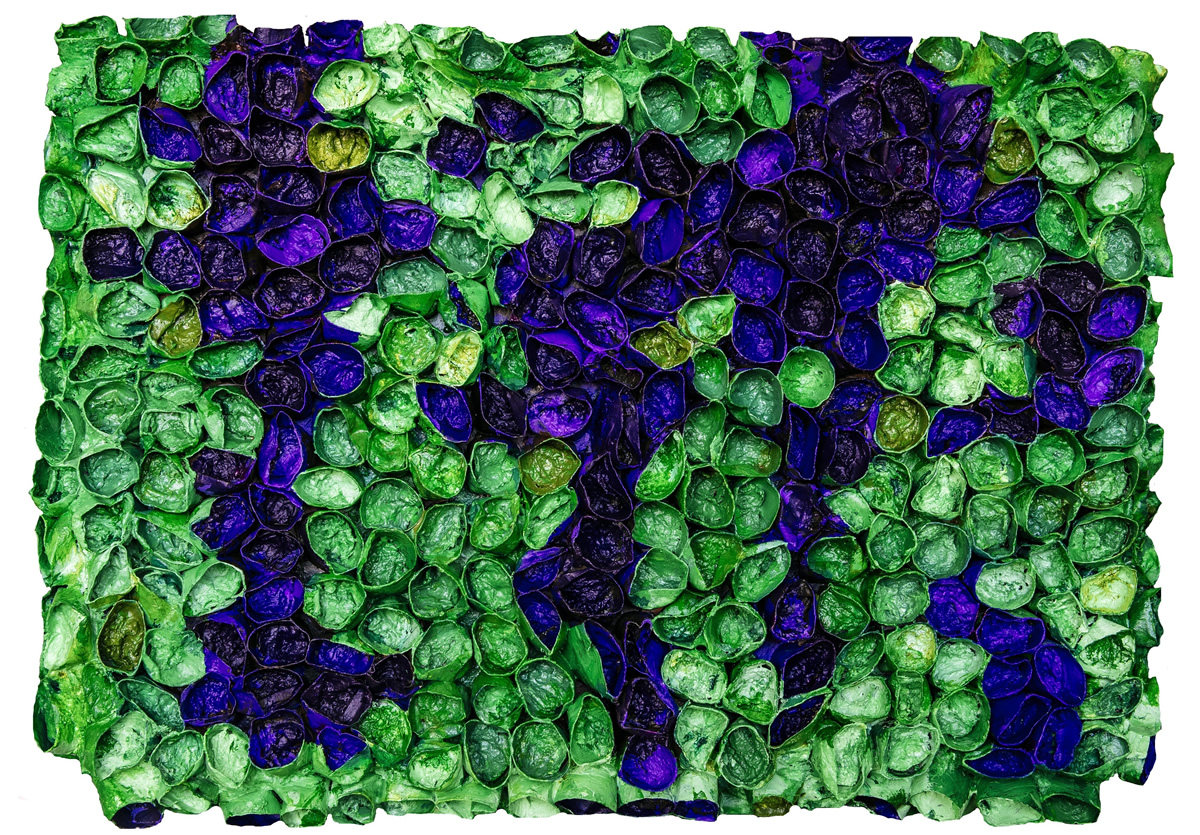
- Irises, 95x65x13cm, recycled paper and acrylic on wood panel
-
- Lilac, 95x65x13cm, recycled paper and acrylic on wood panel
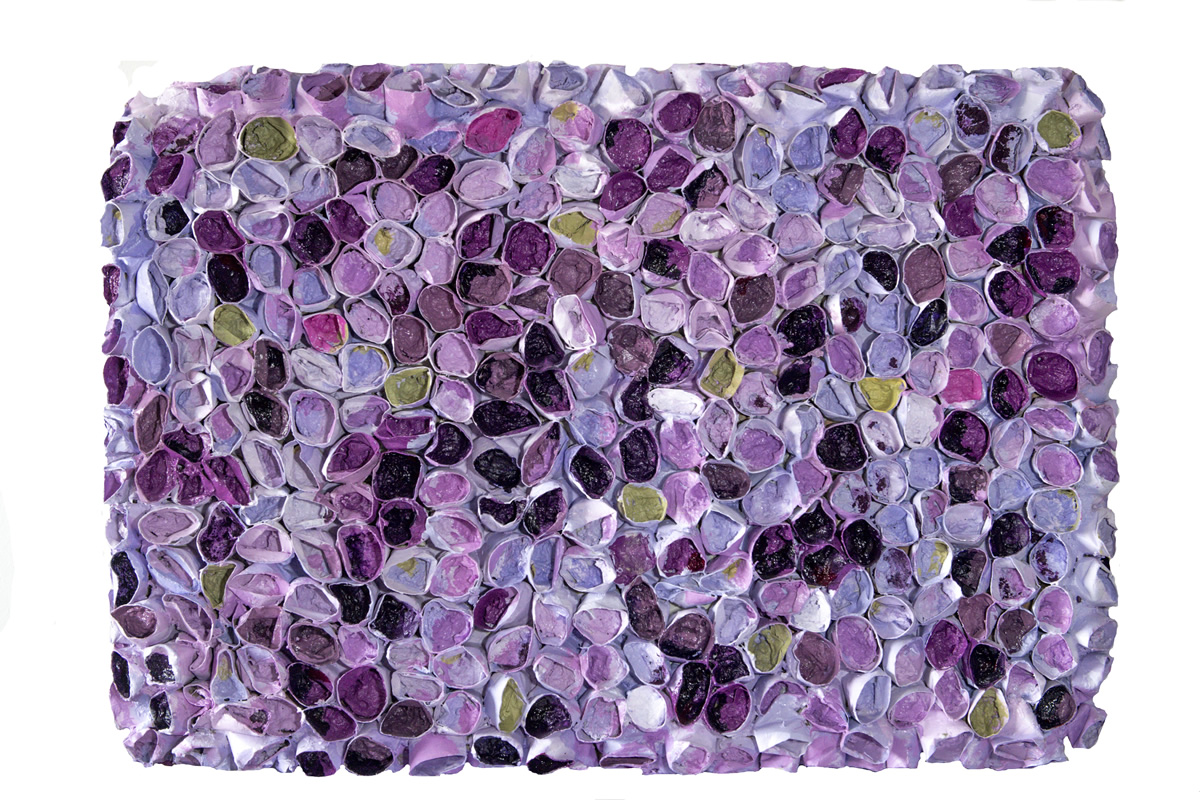
-
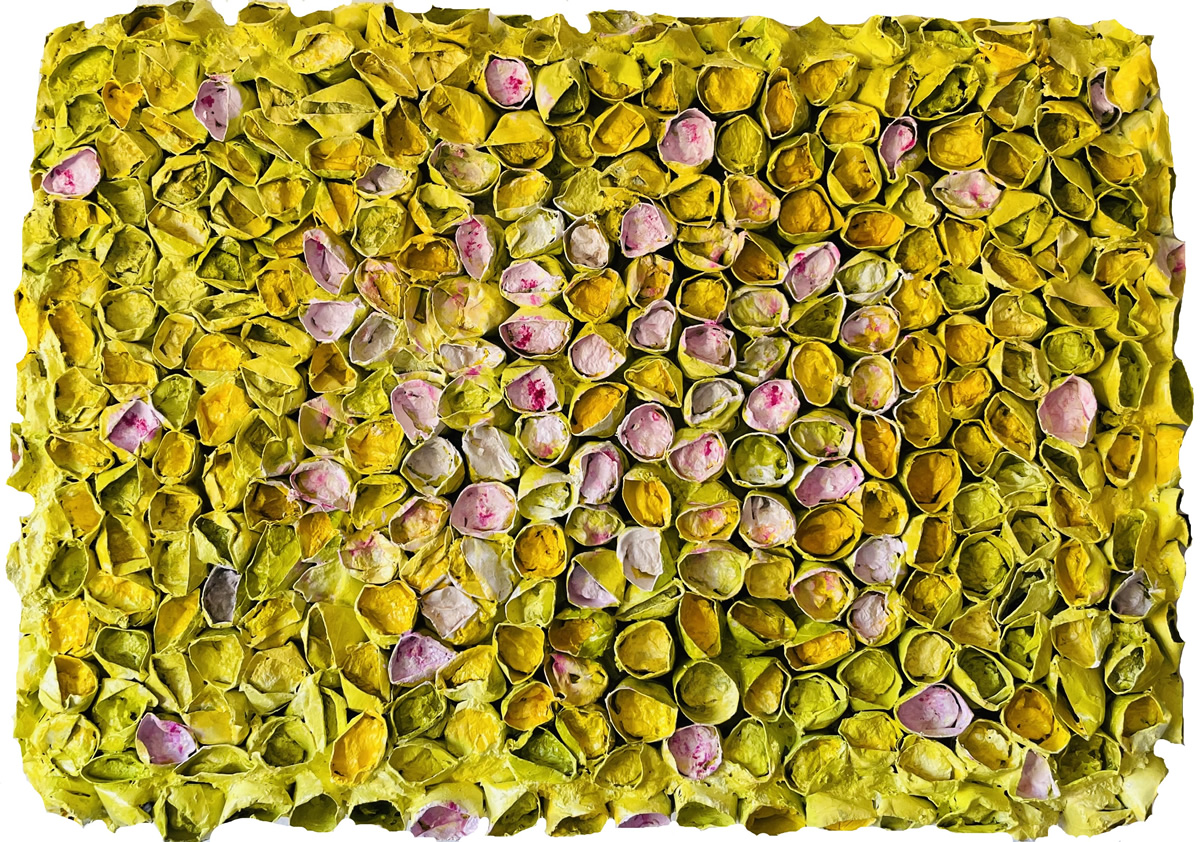
- Mimosa, 95x65x13cm, recycled paper and acrylic on wood panel
-
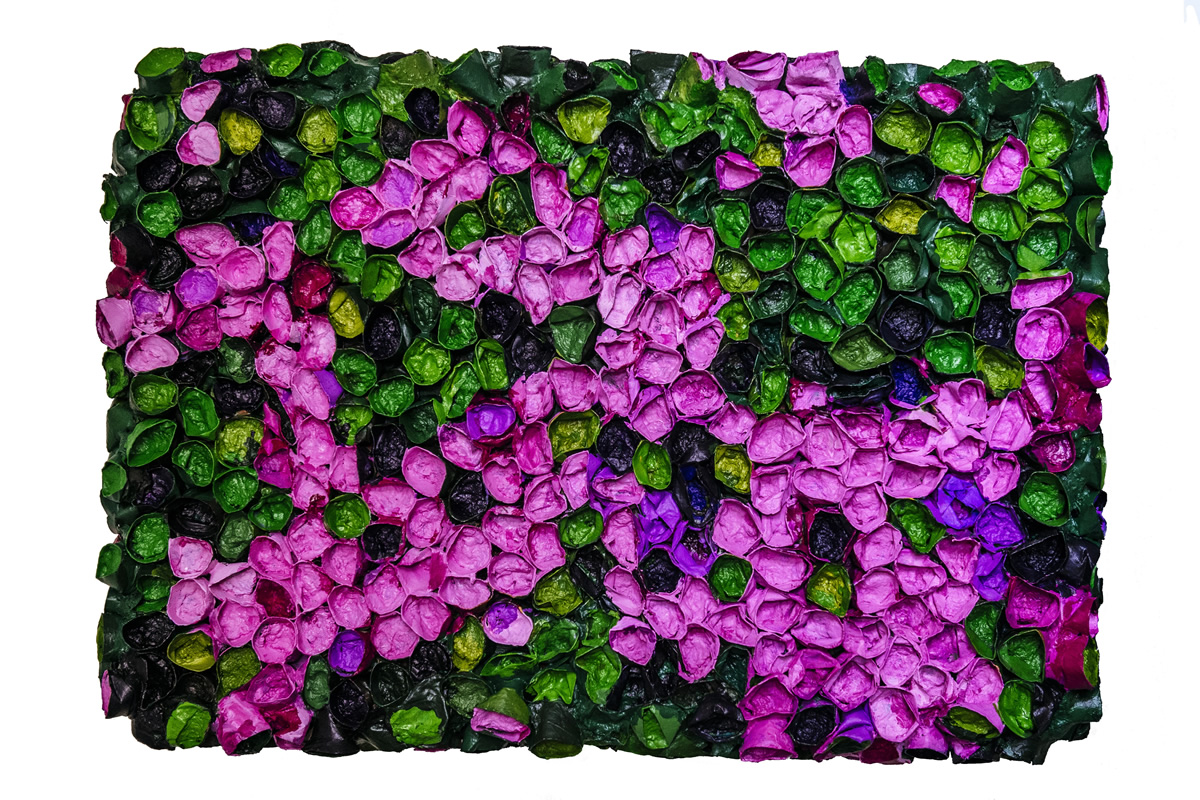
- Rododendron, 95x65x13cm, recycled paper and acrylic on wood panel
-
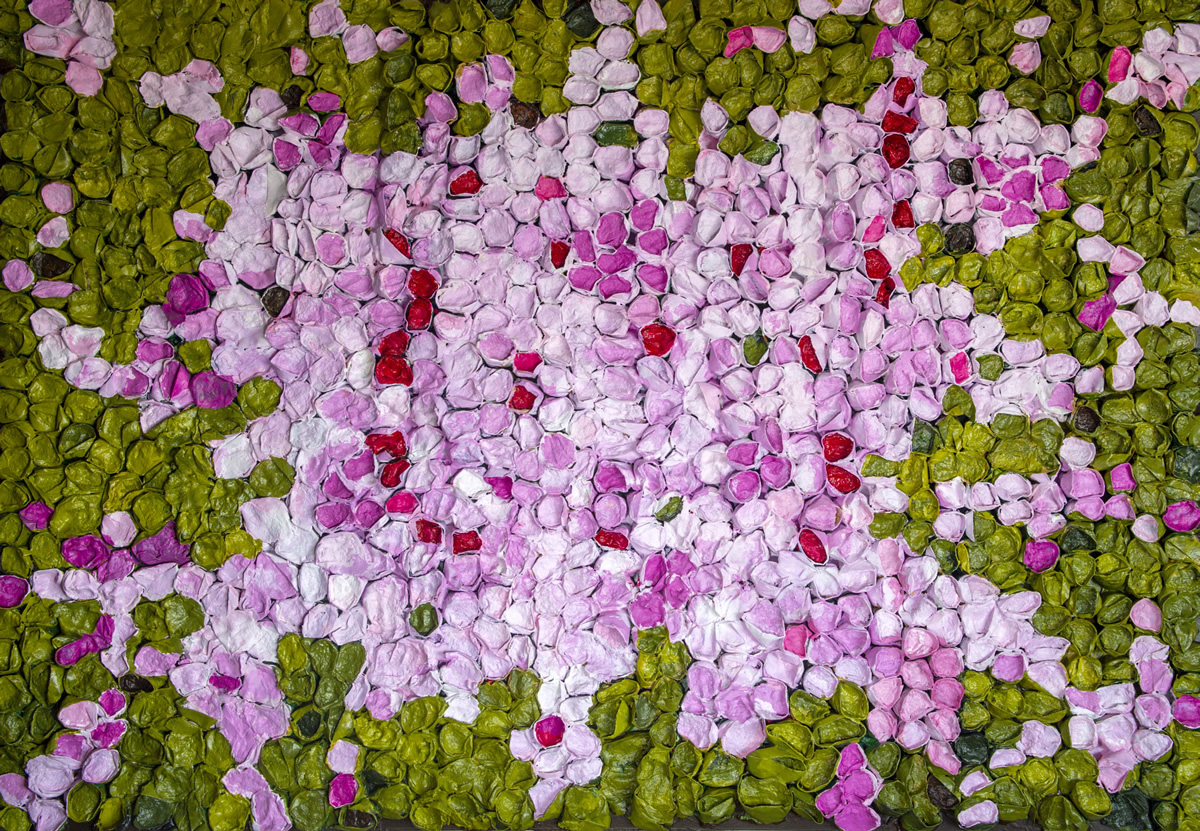
- The feast of peonies, 170x120cm, recycled paper and acrylic on wood panel
In her new series of paintings titled Arboretum, artist Jasna Barisic deepens her longtime dialogue with nature, providing the viewer with an intimate, meditative confession in a visually metamorphosed form. It is the continuation of her systematic exploration of the universal relationship between humans and their environment, and a follow-up to her previous series – Long Cuts (2017–2018), Ocean Sea (2015–2016), Traces in Stone (2010–2011), and the recent series Metamorphosis of Nature (2020–2021). With Arboretum, on which she has been working for the past two years, the artist positions herself within contemporary eco-aesthetic and feminist paradigms, opening a space for contemplating nature as a metonymy for the inner world, and as a reflection of the contemporary relationship with the environment – fragile, depleted, yet persistently vital.
Barišić dives deeper into the space of intimacy – into the inner garden of emotions, an arboretum of memories and relationships that shape her life, spirituality, and art; the space where the creative process intertwines with the act of being, caring, and feeling the inner power. The choice of the title Arboretum implies symbolic space: a garden in which emotions, memories, and ideas grow. In this imaginary yet intensively real landscape, each painting functions as a note – a personal record of people and moments that have touched the artist’s world. During the process of raising awareness and creating new ideas, the author explores not only her own inner self, but also the personalities of people who have left a mark on her; she captures their energy, gestures, and presence through abstract, dynamic surfaces of form and color.
To this sense, Arboretum seems to be a certain topography of awareness and a ‘portrait-garden’ – a space where memories are turned into arranged forms, and the one where faces and characters are transformed into chromatic and textural visual records. Through visual language, Barisic creates a meditative map of intimate situations in which artistic and life experiences intertwine, and nature not only serves as an inspiration, but becomes an active subject. Formally, Jasna Barisic’s works of art blur the line between painting and sculpture – between color and relief, light and shadow. Each composition functions as an entity within a larger whole, as a visual equivalent of a breathing organism. This “organology” of her works of art, with its inner vitality and structure, does not convey a complete, linear artistic idea, but a dynamic, unstable process and perpetual movement.
Arboretum opens a new chapter in the author’s creative process where her reflections on her own environment are extended on the sphere of personal and universal female experiences. In this series, the artist addresses archetypal topics of femininity and motherhood – not through figurative presentation, but through energy, rhythm, and form. In her works, carefully-arranged material layering evokes the power of feminine nature – the ability to create, to nurture, to revive, as well as to surrender to change. Here, femininity is not presented as an aesthetic category but as a driving force – fluid energy shaping and supporting life, the same way the structure of a painting supports its fabric. In this sense, Arboretum is not only a visual, but also an emotional landscape that reflects the artist’s wholeness.
Material used to create her paintings defines Jasna Barisic’s artistic signature: recycled paper, papier-mâché; painted and shaped into relief structures. Paper – fragile, pliable, yet resilient – becomes a metaphor of life and nature itself. Made from trees, discarded, and reused, it carries the symbolism of regeneration and transformation. The artist gives a whole new meaning to discarded material by turning waste into organic art matter – recycling is seen as an act of revival. Consequently, she establishes ecological awareness as an integral part of artistic work, emphasizing the importance of material vitality and the interdependence between humans, nature, and the artistic act.
Besides recycling, the already formed visual identity of Jasna Barisic is presented by the arrangement of organic structures on surfaces as well as by using emotionally charged, vibrant colors. The surface of her paintings is filled with dense, rhythmic structures of almost circular forms. A variety of shapes resembling buds, leaves and petals are carefully arranged in a net without center or boundary. The viewer’s gaze wanders, discovering new micro-spaces and relationships between colors and textures. With this infinite rhythm and material and light flickering, the paintings seem to breathe, leaving the impression of living gardens growing in front of our eyes.
Color becomes the key element that conveys the emotional and symbolic meaning. From the subdued tones used in her earlier series, the artist now steps into a space of expressive, bold strokes, using a palette which is pulsing with life intensity. In works such as Hibiscus Blossom, Lilac, Mimosa, The feast of peonies, color becomes the driving force – the pulsing substance that transforms material experience into sensuality. Colors came to life in the earlier series Metamorphosis of Nature, and now, in Arboretum, it seems they have been completely unleashed. Bold shades of green, red, pink, blue, and yellow shape the visual rhythm of the series – evoking the blossoming of the plant life, as well as the inner vitality and emotional energy of the artist’s experiences. Color is not only a descriptor of form, but also the very creator of form and rhythm – the substance that builds the framework of a painting; it shapes and deconstructs it at the same time, turning the canvas into a living organism of blooming energy.
Standing in front of these works of art, the viewer is not only an observer, but an active participant. Viewing turns into immersion – a spatial, almost somatic perception of matter. In this context, the visual experience becomes a meditative act; Arboretum opens a space of introspection, presence, and sense awareness. Through Arboretum, Jasna Barisic creates a personal microcosm in which nature becomes a mirror of the inner self. Her works are not typical landscapes, but landscapes of consciousness – spaces where growth, death, and regeneration are not only natural phenomena but also existential metaphors. Here, kindness meets power, physicality meets spirituality, and introspection coexists with open-mindedness. As an artistic diary composed of light, color, and texture, it embodies an artistic approach that connects the aspects of contemporary ecological thoughts, feminist sensibility, and poetic introspection.
Arboretum is not a mere catalog of artworks; it offers a deeper insight into a close connection between spiritual and ecological – each painting becomes a living organism in a state of constant transformation. In a quiet, almost conceptual act of creation, Jasna Barišić does not present nature – she inhabits it. Her works breathe with the rhythm of time, form, and material, suggesting the viewer that each painting continues to live, change, and grow – like a garden that never dies.
Marija Jurun, curator and art historian in Split / Croatia